Can an Enlarged Prostate Cause Back Pain? What It Usually Means Instead
By VitalFitnessHub Editorial Team — September 14, 2026
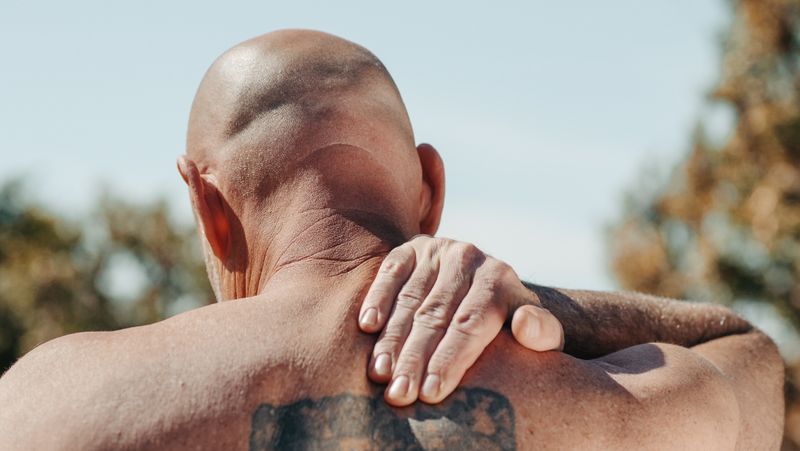
Half of men between 51 and 60 have an enlarged prostate on a tissue level, according to a pooled analysis of more than 1,000 prostates in the Journal of Urology. Roughly the same share of adults report low back pain in any given year. With both that common, the two are going to overlap in millions of men by coincidence alone, which is why "does my prostate cause my back pain?" is one of the most searched prostate questions. The honest answer is that benign prostatic hyperplasia (BPH) itself almost never does. But back or pelvic pain that arrives together with urinary symptoms is a combination worth taking seriously, because several of the things it can mean deserve a doctor's attention, and one of them deserves it quickly.
Why an Enlarged Prostate Rarely Hurts Your Back
The prostate sits deep in the pelvis, below the bladder and in front of the rectum, wrapped around the first inch of the urethra. It has no direct connection to the spine, the lumbar discs, or the nerves that produce most back pain. When it enlarges, it squeezes the urethra, and that produces the classic BPH symptoms: weak stream, straining, frequent trips, getting up at night, the feeling of never quite emptying. Those are plumbing problems, not pain problems.
Men with BPH do sometimes describe a dull heaviness or pressure low in the pelvis or behind the pubic bone, especially when the bladder is full. That is bladder discomfort, and it eases after urinating. Sharp, persistent, or radiating back pain is a different animal, and it should send you looking for a different cause. Our guide to the warning signs of an enlarged prostate lists what BPH actually feels like; back pain is not on the list.
Five Things Back Pain Plus Urinary Symptoms Can Mean
1. Prostatitis, the great imitator
Prostatitis is inflammation of the prostate, and unlike BPH it is defined by pain. The chronic form, chronic prostatitis/chronic pelvic pain syndrome, affects an estimated 5 to 9 percent of men and is the most common urologic diagnosis in men under 50. The National Institute of Diabetes and Digestive and Kidney Diseases lists low back pain alongside pain in the perineum, rectum, penis, testicles, and inner thighs as core symptoms, together with urinary urgency, burning, and painful ejaculation. The pain can come and go over months. A man in his 50s with an enlarged prostate can absolutely have prostatitis at the same time, and when back pain is part of the picture, prostatitis is the more likely culprit.
2. A bladder that is not emptying
When BPH obstructs the urethra badly enough, urine backs up. In chronic retention the bladder stretches slowly and the man may notice only a vague fullness above the pubic bone and dribbling. In acute retention, urination stops altogether and the pain is severe, felt low in the abdomen and sometimes the lower back. The Olmsted County study, which followed 2,115 men for years, found acute retention struck 6.8 men per 1,000 each year overall, but among men aged 70 to 79 with moderate or severe symptoms the rate was 34.7 per 1,000, about 3.5 percent per year. This is the one BPH complication where pain is the headline, and it is an emergency.
3. Urinary tract infection or kidney involvement
Incomplete emptying leaves stagnant urine behind, and stagnant urine grows bacteria. Men presenting with urinary infections have been shown to carry significantly more residual urine than men without, 113 mL against 41 mL in one Journal of Urology series. A bladder infection produces burning, urgency, and cloudy or bloody urine. If the infection climbs to the kidneys, it adds flank pain (the sides of the back below the ribs), fever, and chills. That combination, flank pain with fever and urinary symptoms, needs same-day care.
4. Kidney or bladder stones
Stones cause some of the worst pain in medicine, typically in the flank and radiating toward the groin, coming in waves, with blood in the urine. Bladder stones are more common in men with long-standing BPH because retained urine lets minerals crystallize. Stones can also cause frequency and urgency, so the urinary symptoms overlap with BPH while the pain does not.
5. Prostate cancer that has reached the bone, the rare red flag
Early prostate cancer causes no back pain and usually no symptoms at all. Advanced prostate cancer is different: the bones are its favored destination, with autopsy series finding skeletal spread in about 68 percent of men who die of the disease, and the spine, pelvis, and ribs the most common sites. Bone metastases cause deep, persistent pain that is often worse at night and does not improve with rest or position changes. This is uncommon as a first presentation, but it is the reason "back pain plus prostate" should never simply be waved off in a man over 50, and why a PSA test and exam are the right response rather than reassurance. BPH does not turn into cancer, but the two can coexist; our article on BPH versus prostate cancer walks through how doctors separate them.
How the Pain Itself Tells You Which One
| Pain pattern | Points toward |
|---|---|
| Dull pelvic heaviness, eases after urinating | Ordinary BPH bladder fullness |
| Perineal, rectal, or low back ache with burning and painful ejaculation, waxing and waning over months | Chronic prostatitis |
| Sudden inability to urinate with severe lower abdominal pain | Acute urinary retention |
| Flank pain with fever, chills, cloudy or bloody urine | Kidney infection |
| Wave-like flank-to-groin pain with blood in urine | Stones |
| Deep, constant bone pain, worse at night, unrelieved by rest | Needs cancer ruled out |
| Pain that started after lifting, worse with movement, better with rest | Musculoskeletal, and probably nothing to do with the prostate |
That last row matters. Most back pain in men over 50 is mechanical, from discs, joints, and muscles. If your urinary symptoms are stable and your back pain behaves like a back problem, the two are most likely unrelated even though they arrived in the same decade.
Managing the Prostate Side Regardless
Whatever is causing the pain, an obstructed prostate makes every other pelvic problem worse: more retained urine means more infections, more stone risk, and more chance of acute retention. Reducing the obstruction is therefore worth doing on its own merits. Weight loss and regular walking have measurable effects on prostate volume and symptoms, and alpha blockers or 5-alpha reductase inhibitors relieve obstruction when lifestyle changes are not enough; our guide to reducing an enlarged prostate without surgery ranks the options by evidence.
Supplements sit at the bottom of that evidence ladder and should be treated that way. Saw palmetto failed its two largest trials against placebo. Beta-sitosterol has modest Cochrane-level evidence for symptom relief but does not shrink the gland. ProstaVive combines nettle root, boron, and Panax ginseng in one formula and is a reasonable low-risk addition for men with mild BPH symptoms who want a non-prescription starting point alongside the lifestyle changes. It does nothing for prostatitis, infections, stones, or cancer, and no supplement should delay the exam described below if you have back pain. It comes with a 180-day money-back guarantee, which is long enough to judge it honestly.
Frequently Asked Questions
Can an enlarged prostate cause lower back pain and leg pain? Not directly. Pain that runs down a leg is nearly always a nerve or spine issue, most often sciatica. The exception is advanced prostate cancer pressing on the spine, which is rare and comes with other signs.
Does prostate pain feel like back pain? Prostate pain, when it exists, is felt in the perineum (between the scrotum and anus), the rectum, the base of the penis, or the low pelvis. Some men experience it as low back or sacral ache, which is why prostatitis is often mistaken for a back problem.
Can BPH cause hip pain? No. Hip pain with urinary symptoms in an older man should prompt the same evaluation as back pain, since the pelvis is a common site of bone metastasis, but in the vast majority of cases the hip pain is arthritis.
Will treating my enlarged prostate fix my back pain? Only if the back pain was actually bladder distension or infection from retained urine. If it is musculoskeletal, prostate treatment will not touch it.
When to See a Doctor
See someone promptly, today, if you cannot urinate, if you have back or flank pain with fever or chills, if you see blood in your urine, or if back pain is severe, constant, waking you at night, or accompanied by weight loss. Book a routine appointment if you have any new back pain alongside urinary symptoms and you are over 50, so that a physical exam, urine test, and PSA can sort out which of the five causes above applies. The point is not that back pain means something terrible. It is that back pain with prostate symptoms is a combination doctors know how to decode quickly, and guessing at home is the one approach with no upside.
Working on the prostate symptoms in the meantime? >> See what's in ProstaVive and how the 180-day guarantee works
Sources
- Berry SJ et al. The development of human benign prostatic hyperplasia with age. Journal of Urology, 1984. PubMed
- NIDDK. Prostatitis: Inflammation of the Prostate. NIDDK
- Chronic Prostatitis and Chronic Pelvic Pain Syndrome in Men. StatPearls, NCBI Bookshelf. NCBI
- Jacobsen SJ et al. Natural history of prostatism: risk factors for acute urinary retention (Olmsted County). Journal of Urology, 1997. AUA Journals64508-7)
- Truzzi JC et al. Residual urinary volume and urinary tract infection: is there a cutoff value in asymptomatic men? Journal of Urology, 2008. AUA Journals
- Physiopathology of spine metastasis (skeletal metastasis in 68% of prostate cancer autopsies). International Journal of Surgical Oncology, 2011. PMC
- Male Urinary Retention: Acute and Chronic. StatPearls, NCBI Bookshelf. NCBI
- Bent S et al. Saw palmetto for BPH (STEP). NEJM, 2006; Barry MJ et al. (CAMUS). JAMA, 2011. Summary
- Wilt TJ et al. Beta-sitosterols for benign prostatic hyperplasia. Cochrane Database of Systematic Reviews, 1999. Cochrane
Related reading
- Start here: Prostate Health After 50: The Complete Guide for Men
- What Causes an Enlarged Prostate? The 5 Drivers Behind BPH (and Which Ones You Can Change)
- 7 Warning Signs of an Enlarged Prostate You Should Never Ignore
- BPH vs Prostate Cancer: How to Tell the Difference (And Why It Matters)
Disclaimer: This article is for informational purposes only and is not medical advice. Always consult a healthcare provider before starting any new supplement, medication, or treatment, especially if you have a pre-existing medical condition or take other medications.
Clinically-studied doses: see the Prostate Health ingredient dosages backed by research