Yoga for Beginners Over 50: Gentle Poses to Build Flexibility and Balance
By VitalFitnessHub Editorial Team — July 31, 2026
Reviewed for accuracy by VitalFitnessHub Editorial Team
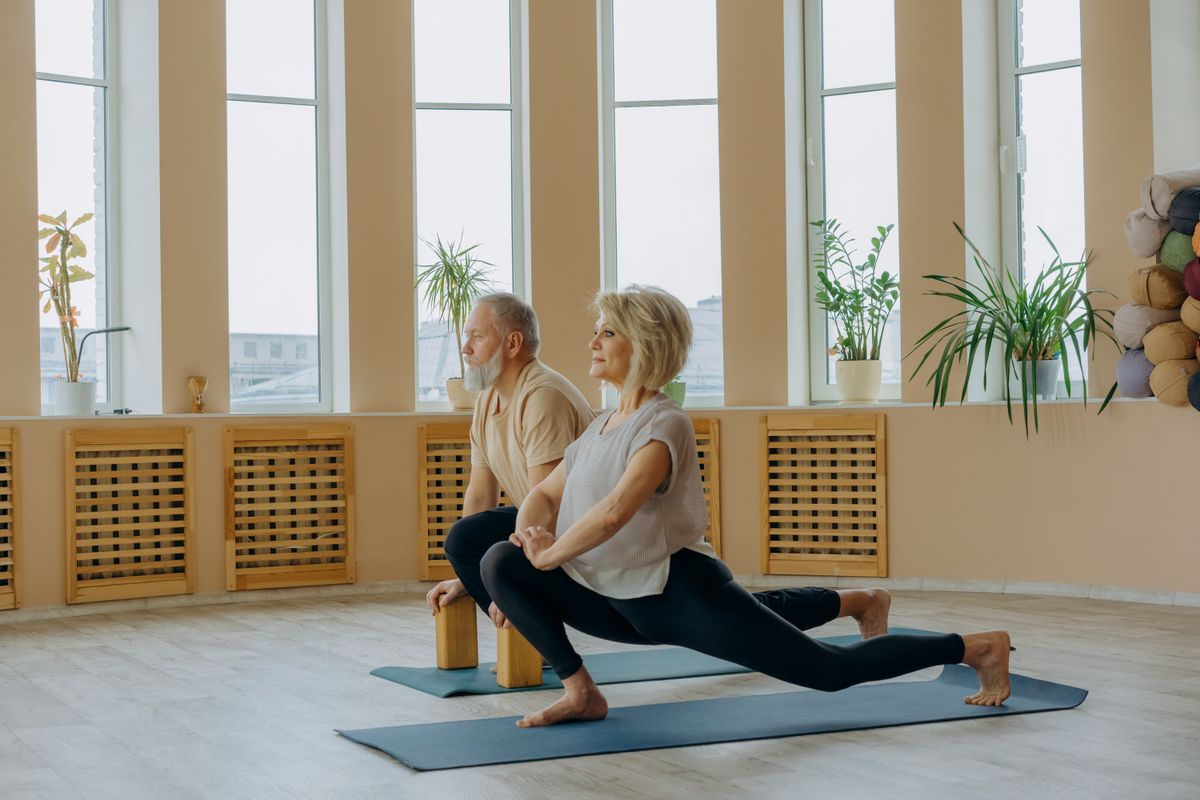
A wobble while stepping off a curb. A stiff hip that makes tying shoes a production. These aren't dramatic events, but they're the kind of small warning signs that tend to show up in your 50s and 60s — and they're also exactly what gentle yoga is good at addressing. You don't need to fold yourself into a pretzel or hold a headstand. The poses that matter most for flexibility and balance as you get older are mostly the slow, supported ones.
Why Balance and Flexibility Matter More With Age
Falls are one of the more serious risks facing older adults, and balance training is one of the few interventions with a real evidence base behind it. Research on fall prevention consistently points to balance and strength work — including yoga-based programs — as associated with reduced fall risk in older populations. Flexibility matters too, though for a less dramatic reason: tight hips and hamstrings change how you walk, and a changed gait is itself a fall risk factor. Improving both isn't about becoming more flexible than you were at 25. It's about keeping the range of motion you need for ordinary movement — getting up from a chair, reaching a top shelf, turning to look over your shoulder in the car.
Which Style of Yoga to Start With
Not all yoga classes are built for a beginner starting later in life, and walking into a fast-paced vinyasa class with no prior experience is a good way to get discouraged or hurt. Three styles are a better entry point:
- Hatha yoga moves slowly through poses with time to focus on alignment, rather than flowing quickly from one to the next. It's often the gentlest "standard" yoga class you'll find at a studio or gym.
- Chair yoga adapts poses so you're seated or using a chair for support, which removes a lot of the balance demand while you're still building strength and mobility. It's a genuinely good starting point, not a lesser version of "real" yoga.
- Restorative yoga uses props — bolsters, blankets, blocks — to support the body in a few poses held for several minutes at a time. It's low-intensity and focused on gentle stretching and relaxation rather than strength.
Any of these three is a reasonable place to start. Many people over 50 begin with chair yoga and graduate to standing poses with support as their balance and confidence improve.
6 Gentle Poses to Start With
1. Seated Mountain Pose (Chair Variation)
Sit tall at the edge of a chair, feet flat on the floor, and lengthen your spine as if a string is pulling the crown of your head upward. This sounds too simple to matter, but it's a genuine posture and body-awareness exercise, and it's a safe way to start any session.
2. Cat-Cow Stretch
On hands and knees (or seated, hands on knees, for a gentler version), alternate between arching your back and rounding it as you breathe. This is one of the better options for loosening a stiff spine and improving the kind of gentle mobility that daily life demands — reaching, turning, bending.
3. Tree Pose (Wall-Supported)
Stand next to a wall or hold the back of a sturdy chair, shift weight onto one leg, and rest the sole of your other foot against your ankle or calf (not the knee joint itself). This is a genuine balance challenge, which is exactly why doing it near a wall or chair matters — you want to build balance, not test it without a safety net.
4. Warrior II (Modified Stance)
Step into a wide stance, bend the front knee, and extend your arms parallel to the floor. Keep the stance shorter and the knee bend shallower than you'd see in a typical class — the goal is building leg strength and hip mobility, not achieving a deep lunge.
5. Seated Forward Fold
Sitting with legs extended (or knees slightly bent if hamstrings are tight), hinge forward from the hips rather than rounding the spine, and let gravity do the stretching. This targets the hamstrings and lower back without the balance demand of a standing fold.
6. Legs-Up-The-Wall
Lie on your back with your legs resting up against a wall, arms relaxed at your sides. This restorative pose doesn't ask for flexibility or balance at all — it's simply a gentle way to end a session, and many people find it genuinely relaxing after a day on their feet.
Safety Tips Before You Start
- Check with a doctor first, especially if you have osteoporosis, a recent joint replacement, uncontrolled blood pressure, or any condition that affects balance. Yoga is generally low-risk, but "generally" isn't the same as "always," and a quick conversation with your physician can flag anything specific to your situation.
- Use a chair or wall for standing balance poses until you're confident. There's no benefit to attempting an unsupported pose before you're ready — building up to it is part of the process, not a shortcut you're skipping.
- Skip forceful twists and deep backbends early on. Gentle range-of-motion work builds a foundation; aggressive stretching before your body is ready is how people get hurt in any form of exercise, yoga included.
- Move slower than feels necessary. Beginner yoga classes for older adults tend to move at a pace that can feel almost too easy at first. That's intentional — the poses are doing their job through control and hold time, not speed.
What to Expect in Your First Class
Walking into a gentle or chair yoga class for the first time is usually less intimidating than people expect. Instructors teaching beginner or senior-focused classes typically spend real time on setup — how to position a chair, where to place a block, how to modify a pose if a knee or shoulder doesn't cooperate. It's common to sit out a pose entirely and simply watch the first time through, which is a normal part of learning, not a failure to keep up. Most gentle classes run 45 minutes to an hour and end with a few minutes of quiet rest, often in a pose like legs-up-the-wall or simply lying flat with eyes closed.
Bring a mat if you have one, wear comfortable clothing you can move in, and don't eat a large meal right beforehand. If a studio or gym offers a free trial class, that's a low-pressure way to see whether the pace and instructor style fit before committing to a package.
How Often Should You Practice
Consistency tends to matter more than intensity for flexibility and balance gains. Two to three sessions a week is a reasonable starting cadence for a formal class, with many people supplementing on off-days with a few minutes of simple stretching or the poses above done at home. Balance in particular seems to respond well to frequent, brief practice — a few minutes most days rather than one long session once a week — which is part of why pairing a weekly class with short daily practice tends to work better than either alone.
Common Concerns for Beginners Over 50
"I'm not flexible enough for yoga." This is one of the most common things instructors hear, and it has it backwards — yoga is what builds flexibility, not a prerequisite for starting it. Beginner classes are designed for exactly this starting point.
"What if I can't balance on one leg at all?" Use a wall or chair for as long as you need to. There's no schedule you're supposed to be on. Some people use support for months before trying a pose unsupported, and that's a completely normal progression, not a sign of falling behind.
"Will yoga be enough exercise on its own?" Gentle yoga is excellent for flexibility, balance, and gentle strength, but it's not typically a substitute for cardiovascular exercise or more targeted strength training if those are also goals. It complements other forms of activity well rather than replacing them entirely.
Building a Daily Balance Habit Alongside Yoga
Yoga classes, even gentle ones, are usually something you do a few times a week rather than every day. Balance itself, though, responds well to short, frequent practice — which is why some people pair a weekly or twice-weekly yoga class with a brief daily balance routine on the other days.
If that's appealing, Neuro-Balance Therapy is worth knowing about as a complementary habit rather than a replacement for yoga. It's a video-guided digital program built around a short daily ritual — ranging from about 10 seconds to a few minutes depending on the exercise — aimed at adults 60 and up, designed to help reactivate underused nerves and muscles in the feet and legs that play a role in balance and fall risk. It doesn't require any equipment, which makes it easy to slot in on days you're not doing a full yoga session, and it comes with a 60-day money-back guarantee if it's not a fit.
The two aren't competing approaches — gentle yoga builds flexibility and full-body balance through poses like the ones above, while a short daily routine like Neuro-Balance Therapy targets the feet and legs specifically, several times a week, in a couple of minutes rather than a full class.
Ready to try Neuro-Balance Therapy? >> Learn more about Neuro-Balance Therapy
Disclaimer: This article is for informational purposes only. Always consult a healthcare provider before starting any new exercise, supplement, or diet program, especially if you have a pre-existing medical condition or take medications.